Commission for the Future of Counselling and Psychotherapy – first evidence session roundup
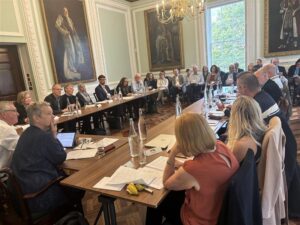
The Commission for the Future of Counselling and Psychotherapy held its first evidence session in London on 16 October, focusing on the current state of the counselling and psychotherapy sector. This opening session set the scene for the Commission’s work, examining the professional and policy landscape and highlighting the challenges and opportunities facing practitioners, services and clients.
The Commission was launched in October 2025 by the Partnership of Counselling and Psychotherapy Bodies.
Summary of the discussion
The first evidence session brought Commissioners and invited subject-matter experts to examine the current landscape of counselling and psychotherapy across the UK. The discussion highlighted several common themes, which are summarised below.
The limitations of the current model of provision
- Catering for individual choice is key, this provides autonomy and allows clients to select from a range of therapies alongside or without medication
Weaknesses of current commissioning decisions
- Existing government policy does not cater to the breadth and depth of mental health challenges experienced, leading to ineffective commissioning of the workforce, resources and services required to meet need and demand.
Cultural competency and diversity
- A lack of culturally competent care risks isolating marginalised groups. A ‘one size fits all’ approach to counselling and psychotherapy can be inadequate in meeting diverse client needs
The evidence base for counselling and psychotherapy
- The limited evidence available suggests that outcomes are promising but also shows the need for consistent evidence gathering across local authorities
The public perception of the profession
- A poor public understanding of the profession may lead potential clients not to access counselling or psychotherapy
Opportunities
- The Commission presents us with the opportunity to reshape the counselling and psychotherapy professions. However, to do this, we need to tackle certain inbuilt assumptions about what therapies should be offered, how services should be organised, how we talk about therapy and whose experiences are being prioritised
Independent PCPB chair, Paul Buckley, said: ‘This first evidence session marked an important milestone for the counselling and psychotherapy profession. By bringing together expertise from every corner of counselling and psychotherapy, we are building a clear picture of the sector’s needs and opportunities. The Commission’s work will help ensure our collective voice is heard and that future policy reflects the realities of practice across the UK.’
Commissioners
The Commission is independently co-chaired by Phil Hope, former Minister of State for Care Services, and Andrea Sutcliffe an influential leader and specialist in health service delivery and regulation.
It also includes nominated representatives from each of the PCPB partners as well as appointed Commissioners to include academics, industry experts, decision-makers, practitioners and people with lived experience.
PCPB partner Commissioners
- Dr Heather Churchill – Association of Christians in Counselling and Linked Professions (ACC)
- Professor Lynne Gabriel – British Association for Counselling and Psychotherapy (BACP)
- Lee Smith – British Psychoanalytic Council (BPC)
- Graeme Layzell – Human Givens Institute (HGI)
- Lindsay Cooper – National Counselling and Psychotherapy Society (NCPS)
- Pippa Donovan – UK Council for Psychotherapy (UKCP)
Appointed Commissioners
- Andy Bell – CEO, Centre for Mental Health
- Professor Divine Charura – York St John University
- Kate Day – NCPS Children and Young People Ambassador
- Emma Davies – director, The Exchange
- Chris Frederick – expert by experience
- Julian Harrison – expert by experience
- Myira Khan – award-winning counsellor and author, Myira Khan Counselling
- Professor Alessandra Lemma – University College London
- Professor John McLeod – Abertay University
- Anjula Mutanda – broadcaster, author, columnist and relationship therapist
- Mat Pronger, Psychotherapy and Counselling Union
- Sebastian Rees – The Institute for Public Policy Research
- Professor Andrew Reeves – transdisciplinary mental health practitioner
- Dr Alistair Ross – University of Oxford
- Mark Rowland – CEO, Mental Health Foundation
- Dr Caryl Sibbett – psychotherapist, supervisor, art psychotherapist and trainer, Kairos Counselling
At each evidence session, subject matter experts are also invited to contribute evidence.
During this first session the Commission heard evidence from:
- Dr Sarah Hughes – CEO, Mind
- Sir Norman Lamb – Former Minister of State for Care and Support
- Joe Lane – Deputy Director, Children’s Commissioner
Next steps
Insights from this first session and the following sessions, will help shape the Commission’s final report and recommendations, which will be published in summer 2026 after all the evidence sessions have taken place.
The next evidence session – entitled ‘counselling and psychotherapy, is there a case for statutory regulation?’ – is being held online on Tuesday 2 December. Two more UK wide sessions will take place in early 2026 and spring 2026. Dedicated events for Scotland, Wales and Northern Ireland will also be held.
Get involved
A public call for evidence will open in January 2026, giving practitioners, organisations and members of the public the opportunity to contribute directly to the Commission’s work. The evidence call will be open for eight weeks and it’ll be used to inform the final report and recommendations, alongside the evidence given and the Commission sessions.
Further details of the commission are available on our Commission for the Future of Counselling and Psychotherapy webpage.